

The Incipiency
By VSE Michael Bakare – Regional Head Western Canada Diocese
“Men are God’s method. The Church is looking for better methods; God is looking for
better men…What the Church needs today is not more machinery or better, not new
organizations or more and novel methods, but men whom the Holy Ghost can use-
men of prayer, men mighty in prayer. The Holy Spirit does not flow through methods,
but through men. He does not come on machinery, but on men. He does not anoint
plans, but men–men of prayer.” E. M. Bounds in “The Power of Prayer”.
The Hebrew word for the verb “to anoint” is mashach and this is also the root word for
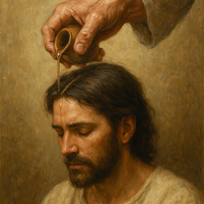
Messiah, which means “anointed one.” The specific practice of anointing by pouring
oil on the head was used as a symbolic act for officially designating and setting apart
a person for a certain public and/or leadership function in the community or in an
organisation. It is usually a one-time event much like an inauguration or ordination.
Anointment is a spiritual act whose raison d’être dates to the consecration of Aaron
and subsequently his sons for special services unto God in the tabernacle. After his
anointment, he became the first in the tribe of LEVI to become a priest. He thus started
the anointment process which all “sons of LEVI” followed. The process to anoint was
done on people as well as other items.
Other items
People were not the only entities anointed in the old days. Things, objects and places
were also anointed to sanctify, consecrate and make holy as they were being
dedicated to a special purpose for God or before being used. Even in todays world,
Churches, homes, cars and other valuable items are anointed to consecrate or
dedicate.
Altars: Exodus 29:36 let us know that an altar was anointed with oil in the process of
a sacrifice to God. This was part of the consecration process of the altar.
Stone: In Genesis 28: 18-22, Jacob woke up and anointed the stone by the pouring
of oil and named the city Bethel.
Tabernacle: In Exodus 40:9, the Lord instructed that the tabernacle and all its contents
be anointed with oil to consecrate them for Gods use.
People
As mentioned earlier, anointment was used to consecrate and separate that person
or individual for Gods use; in preparation for a mission or commission. The anointment
was not merely a physical show of approval but was actually a harrowing experience
of spiritual elevation. It was a major difference between Israel and the other nations;
when God had someone anointed or authorized for leadership He also provided the
empowerment of the Holy Spirit to do guide him in the job (1 Sam. 16:13; Isa. 61:1).
Saul failed as a King, when the spiritual anointing of the Lord left him, all he had left
was the physical anointing, which did not help keep him in his seat as Kling.
There were three main sets of people who were anointed then, they are;
- Priests, Exo. 28:41;
- Kings, 1 Sam. 10:1
- Prophets, 1 Ki. 19:16.
Aaron was anointed as a Priest while David was anointed as a King. Elisha was
anointed as a prophet by Elijah under the instructions of God. Oil is used for this
process and the oil used was expensive and scarce at the time (mainly olive oil). The
use of the expensive oil was to show the value of the individual and the person’s worth
to the Lord. Jacob used oil on his offering to God to show God’s worth to him (being
worth more than wealth) Genesis 35:14.
God’s design is for His anointing to come upon those He finds trustworthy, to
empower them to do great things for Him.” ― Rodney Burton, Carrying the Torch
for Revival
The Physical and Spiritual Anointing
Physical
In most cases, the individual anointed is easily recognisable. They have physical
attributes that make them stand-out amongst people. Especially those anointed as
Kings and Priests in the old days. This led to a great clamour for such positions
mainly for the pomp and pageantry. Those with the physical anointing are generally
identified by their regalia, title, wealth, etc. In modern times, in the Celestial church,
this also rings true, given the hierarchical structure of the church.
Spiritual
This individual may not necessarily be easily identifiable. The anointing has
attributes that are not physical. The manifestation of this anointing is more spiritual.
The grace, to prophesy, see visions, counsel of wisdom, the anointing of gladness
and joy (Psalm 45: 7) are all God given spiritual attribute of those with the spiritual
anointing. (Isaiah 61). The gifts and as well as the fruits of the spirit are the
hallmarks of this type of anointing. It is an anointment into function.
This type of anointing can occur at any time in the life of a person and can occur with
or without the pouring of oil. As you will recall, this great anointing came as fire over
the apostles on the day of Pentecost. (Acts 2: 1). The anointing in the life of Isaiah
was via the hot coal on his tongue (Isaiah 6: 1), whilst Jeremiah was anointed in the
womb (Jeremiah 1:5).
The mix (Physical and Spiritual)
People can posses either anointing or even in many cases both. Saul was anointed
with oil on top of the mountain by Samuel. Signifying that he has been consecrated
for a mission. This mission was to become the King of Israel. The anointment
qualified him to sit on a throne, wear expensive apparel and make proclamations –
the Physical anointment. However, Samuel understood that even though Saul had
the of oil, he still needed the new anointing of the spirit to function as a true King
after the heart of God.
Therefore, when Saul was on the way back, he met a company of prophets and
suddenly, a greater anointing overcame him, and he began to prophecy. That
overwhelming felling from the touch of the Lord is the spiritual anointing; the
anointing of the spirit (1st Samuel 10: 1, 10).
Anointment
After at least three years as a member of CCC (at least two years after baptism), and
following appropriate training, assessed performances and observed spiritual growth,
you may then be eligible for anointment. This is when you are given the loin of office
after recommendation from your shepherd and anointment by the Pastor. Every
anointment is a big spiritual and ecclesiastical responsibility that must be used solely
in the service of God and in the winning of souls into His Kingdom. Using your
anointment for nefarious, simoniacal and amorous practices is prohibited.
Your hierarchical elevation must not be perceived as an opportunity to harass
members, conspire against leaders, arrogate yourself before the throne of God with
flagrant disregard to God’s ordinances. Rather, the elevation must be taken as an
opportunity to humble yourself and re-dedicate your service to God. Being well
grounded in the word of God and with an in-depth understanding of your roles and
responsibilities in the body of Christ. Remember, your anointing is not to oppress or
suppress others, but to have a positive impact on the life of others.
Though the process is seen as a physical one, with the laying of hands, the pouring
of oil and the wearing of special robes. The true functionality of such anointment
comes with the spiritual anointing that either precedes or succeeds the process.
Prayer

Say unto the Lord, Father I need your anointing. I thank you for the Physical
anointing.  I have been consecrated as a minister, manager, business owner,
hairdresser, student etc. but I cannot function without the new anointing of the
Holy Spirit.  Today, touch me with your hand of anointing and pour out your new
anointing over me this day so that I can flourish in all that I do In Jesus Name.

AMEN